Would People Respond to Funny or Serious Writing
Sense of humor (Commonwealth English language) or sense of humour (American English) is the tendency of experiences to provoke laughter and provide amusement. The term derives from the humoral medicine of the ancient Greeks, which taught that the residuum of fluids in the man body, known as humours (Latin: humor, "body fluid"), controlled human health and emotion.
People of all ages and cultures respond to humour. Nigh people are able to experience sense of humour—be amused, grinning or laugh at something funny (such as a pun or joke)—and thus are considered to take a sense of humour. The hypothetical person defective a sense of humour would probable find the behaviour inducing it to be inexplicable, foreign, or fifty-fifty irrational. Though ultimately decided past personal taste, the extent to which a person finds something humorous depends on a host of variables, including geographical location, culture, maturity, level of education, intelligence and context. For example, young children may favour slapstick such as Dial and Judy puppet shows or the Tom and Jerry cartoons, whose physical nature makes it attainable to them. By contrast, more sophisticated forms of humor such as satire require an agreement of its social significant and context, and thus tend to appeal to a more than mature audience.
Theories
Many theories exist nearly what humour is and what social office it serves. The prevailing types of theories attempting to account for the being of humour include psychological theories, the vast majority of which consider humour-induced behaviour to exist very healthy; spiritual theories, which may, for example, consider humour to exist a "gift from God"; and theories which consider humour to be an unexplainable mystery, very much like a mystical feel.[1]
The beneficial-violation theory, endorsed by Peter McGraw, attempts to explain sense of humour's existence. The theory says 'humour only occurs when something seems wrong, unsettling, or threatening, simply simultaneously seems okay, acceptable or rubber'.[two] Humour tin exist used as a method to hands engage in social interaction by taking away that awkward, uncomfortable, or uneasy feeling of social interactions.
Others believe that 'the appropriate use of humor can facilitate social interactions'.[iii]
Views
Some claim that sense of humour should not exist explained. Author E. B. White in one case said, "Humor can be dissected equally a frog can, but the affair dies in the procedure and the innards are discouraging to any but the pure scientific listen."[4] Counter to this argument, protests against "offensive" cartoons invite the dissection of sense of humor or its lack by aggrieved individuals and communities. This process of dissecting sense of humour does non necessarily banish a sense of humour but directs attention towards its politics and assumed universality (Khanduri 2014).[5]
Arthur Schopenhauer lamented the misuse of humour (a German loanword from English) to hateful any blazon of comedy. Nonetheless, both humour and comic are ofttimes used when theorising virtually the subject. The connotations of humour as opposed to comic are said to be that of response versus stimulus. Additionally, humour was thought to include a combination of ridiculousness and wit in an individual; the paradigmatic case being Shakespeare's Sir John Falstaff. The French were slow to adopt the term humour; in French, humeur and sense of humour are still two different words, the former referring to a person'southward mood or to the archaic concept of the four humours.[ citation needed ]
Non-satirical humour tin be specifically termed droll humor or recreational drollery.[six] [7]
Sociological factors
Every bit with any art form, the acceptance of a particular style or incidence of humour depends on sociological factors and varies from person to person. Throughout history, comedy has been used as a form of entertainment all over the world, whether in the courts of the Western kings or the villages of the Far Eastward. Both a social etiquette and a certain intelligence can be displayed through forms of wit and sarcasm. Eighteenth-century High german author Georg Lichtenberg said that "the more yous know humour, the more you go enervating in fineness."[8]
Ancient Greece
Western humor theory begins with Plato, who attributed to Socrates (as a semi-historical dialogue character) in the Philebus (p. 49b) the view that the essence of the ridiculous is an ignorance in the weak, who are thus unable to retaliate when ridiculed. Later, in Greek philosophy, Aristotle, in the Poetics (1449a, pp. 34–35), suggested that an ugliness that does not disgust is fundamental to humour.
Bharat
In aboriginal Sanskrit drama, Bharata Muni's Natya Shastra defined sense of humor (hāsyam) equally one of the ix nava rasas, or principle rasas (emotional responses), which can exist inspired in the audience by bhavas, the imitations of emotions that the actors perform. Each rasa was associated with a specific bhavas portrayed on stage.
In Arabic and Persian culture

Muhammad al-Baqir's Hadith about humour
The terms one-act and satire became synonymous later Aristotle's Poetics was translated into Arabic in the medieval Islamic world, where it was elaborated upon by Standard arabic writers and Islamic philosophers such equally Abu Bischr, his educatee Al-Farabi, Persian Avicenna, and Averroes. Due to cultural differences, they disassociated comedy from Greek dramatic representation, and instead identified it with Arabic poetic themes and forms, such as hija (satirical poesy). They viewed one-act equally simply the "art of reprehension" and made no reference to light and cheerful events or troublesome beginnings and happy endings associated with classical Greek comedy. Later on the Latin translations of the twelfth century, the term one-act thus gained a new meaning in Medieval literature.[9]
Caribbean
Mento star Lord Flea, stated in a 1957 interview that he thought that: "West Indians have the best sense of humour in the world. Even in the most solemn song, like Las Kean Fine ["Lost and Can Non Be Establish"], which tells of a boiler explosion on a saccharide plantation that killed several of the workers, their natural wit and humor smoothen though."[x]
People's republic of china
Confucianist Neo-Confucian orthodoxy, with its emphasis on ritual and propriety, has traditionally looked downwards upon sense of humour as subversive or unseemly. Humor was perceived as irony and sarcasm.[eleven] The Confucian Analects itself, still, depicts the Master every bit fond of humorous cocky-deprecation, once comparing his wanderings to the existence of a homeless canis familiaris.[12] Early on Daoist philosophical texts such equally Zhuangzi pointedly brand fun of Confucian seriousness and make Confucius himself a slow-witted figure of fun.[13] Joke books containing a mix of wordplay, puns, situational humour, and play with taboo subjects like sex and scatology, remained pop over the centuries. Local performing arts, storytelling, vernacular fiction, and verse offer a wide variety of humorous styles and sensibilities.
Famous Chinese humorists include the aboriginal jesters Chunyu Kun and Dongfang Shuo; writers of the Ming and Qing dynasties such as Feng Menglong, Li Yu,[14] and Wu Jingzi; and mod comic writers such every bit Lu Xun, Lin Yutang, Lao She, Qian Zhongshu, Wang Xiaobo, and Wang Shuo, and performers such as Ge You, Guo Degang, and Zhou Libo.
Modern Chinese humor has been heavily influenced not only by ethnic traditions, merely also by foreign sense of humour, circulated via impress civilisation, movie theatre, television, and the internet.[15] During the 1930s, Lin Yutang'south phono-semantic transliteration yōumò ( 幽默 ; humour) caught on every bit a new term for sense of humor, sparking a fad for humour literature, besides every bit impassioned argue nigh what type of humorous sensibility best suited China, a poor, weak land under partial foreign occupation.[xvi] [17] [18] While some types of one-act were officially sanctioned during the dominion of Mao Zedong, the Party-state's arroyo towards sense of humour was generally repressive.[19] Social liberalisation in the 1980s, commercialisation of the cultural market in the 1990s, and the advent of the cyberspace have each—despite an invasive state-sponsored censorship apparatus—enabled new forms of humour to flourish in China in recent decades.[20]
The social transformation model of humour predicts that specific characteristics, such as physical attractiveness, interact with humour.[21] This model involves linkages between the humorist, an audience, and the bailiwick matter of the humour.[21] The two transformations associated with this particular model involves the bailiwick matter of the sense of humor, and the modify in the audience'southward perception of the humorous person, therefore establishing a relationship between the humorous speaker and the audience.[21] The social transformation model views sense of humour every bit adaptive because it communicates the present desire to be humorous as well as future intentions of being humorous.[21] This model is used with deliberate cocky-deprecating humour where ane is communicating with desires to be accepted into someone else's specific social group.[21] Although self-deprecating sense of humour communicates weakness and fallibility in the bid to gain some other'south affection, it can be ended from the model that this type of humor can increase romantic attraction towards the humorist when other variables are as well favourable.[21]
Physical attractiveness
90% of men and 81% of women, all college students, report having a sense of humour is a crucial characteristic looked for in a romantic partner.[22] Humor and honesty were ranked equally the two virtually important attributes in a significant other.[23] It has since been recorded that humour becomes more than evident and significantly more of import equally the level of commitment in a romantic relationship increases.[24] Recent enquiry suggests expressions of sense of humour in relation to physical bewitchery are ii major factors in the want for future interaction.[21] Women regard physical attractiveness less highly compared to men when information technology came to dating, a serious relationship, and sexual intercourse.[21] Nonetheless, women rate humorous men more desirable than nonhumorous individuals for a serious relationship or wedlock, but just when these men were physically attractive.[21]
Furthermore, humorous people are perceived by others to be more cheerful but less intellectual than nonhumorous people. Cocky-deprecating sense of humor has been found to increment one'south desirability and physical attractiveness to others for committed relationships.[21] The results of a report conducted past McMaster Academy suggest humour tin positively affect one'due south desirability for a specific relationship partner, but this effect is only most likely to occur when men use humour and are evaluated past women.[25] No evidence was found to suggest men prefer women with a sense of humour every bit partners, nor women preferring other women with a sense of humour every bit potential partners.[25] When women were given the forced-choice design in the study, they chose funny men every bit potential relationship partners even though they rated them as existence less honest and intelligent.[25] Mail service-Hoc analysis showed no relationship between humour quality and favourable judgments.[25]
Psychological well-existence

Humour can be a way of dealing with the menacing or unpleasant: Sprayed comment below a memorial plaque for Alois Alzheimer who first described the retention-damaging Alzheimer'south disease - the German text means "Alois, nosotros will never forget yous!"
It is generally known that humour contributes to higher subjective wellbeing (both physical and psychological).[26] Previous enquiry on humor and psychological well-being show that sense of humour is in fact a major gene in achieving, and sustaining, higher psychological wellbeing.[26] [27] This hypothesis is known as general facilitative hypothesis for humour.[26] That is, positive humour leads to positive health. Not all contemporary research, nonetheless, supports the previous exclamation that humour is in fact a crusade for healthier psychological wellbeing.[28] Some of the previous researches' limitations is that they tend to utilise a unidimensional approach to sense of humour because it was e'er inferred that sense of humor was deemed positive. They did not consider other types of sense of humor, or sense of humor styles. For example, self-defeating or ambitious humour.[29] Research has proposed ii types of humour that each consist of 2 styles, making 4 styles in total. The ii types are adaptive versus maladaptive humour.[29] Adaptive sense of humour consist of facilitative and self-enhancing humour, and maladaptive is self-defeating and aggressive humour. Each of these styles can have a different impact on psychological and individuals' overall subjective wellbeing.[29]
- Affiliative style sense of humour. Individuals with this dimension of sense of humour tend to use jokes as a means of affiliating relationships, amusing others, and reducing tensions.[29]
- Cocky-enhancing style sense of humor. People that autumn under this dimension of humour tend to take a humorous perspective of life. Individuals with self-enhancing humour tend to apply it every bit a mechanism to cope with stress.[29]
- Aggressive humor. Racist jokes, sarcasm and disparagement of individuals for the purpose of amusement. This type of humour is used past people who do not consider the consequences of their jokes, and mainly focus on the entertainment of the listeners.[29]
- Cocky-defeating humour. People with this fashion of humour tend to amuse others by using self-disparaging jokes, and likewise tend to laugh along with others when being taunted. It is hypothesized that people use this fashion of humour as a mean of social acceptance. Information technology is also mentioned that these people may have an implicit feeling of negativity. So they utilise this humour equally a means of hiding that inner negative feeling.[29]
In the study on humour and psychological well-being, enquiry has concluded that high levels of adaptive type humour (affiliative and self-enhancing) is associated with better cocky-esteem, positive affect, greater cocky-competency, equally well equally anxiety control and social interactions.[thirty] All of which are constituents of psychological wellbeing. Additionally, adaptive humour styles may enable people to preserve their sense of wellbeing despite psychological problems.[27] In contrast, maladaptive humour types (aggressive and self-defeating) are associated with poorer overall psychological wellbeing,[30] emphasis on higher levels of anxiety and depression. Therefore, humour may have detrimental furnishings on psychological wellbeing, only if that humour is of negative characteristics.[30]
Physiological effects

Humour is often used to make light of hard or stressful situations and to brighten upwards a social atmosphere in full general. It is regarded past many as an enjoyable and positive experience, then information technology would be reasonable to presume that it might have some positive physiological effects on the body.
A study designed to exam the positive physiological effects of sense of humor, the relationship betwixt being exposed to humour and pain tolerance in particular, was conducted in 1994 past Karen Zwyer, Barbara Velker, and Willibald Ruch. To test the effects of humour on pain tolerance the test subjects were first exposed to a brusk humorous video clip and so exposed to the cold pressor test. To place the aspects of humor which might contribute to an increase in pain tolerance the study separated its l-six female person participants into 3 groups, cheerfulness, exhilaration and humour production. The subjects were farther separated into two groups, high Trait-Cheerfulness and loftier Trait-Seriousness according to the State-Trait-Cheerfulness-Inventory. The instructions for the 3 groups were as follows: the cheerfulness group were told to go excited about the film without laughing or smiling, the exhilaration group was told to express mirth and smile excessively, exaggerating their natural reactions, the sense of humor product group was told to make humorous comments almost the video clip equally they watched. To ensure that the participants actually found the movie humorous and that it produced the desired furnishings the participants took a survey on the topic which resulted in a hateful score of three.64 out of 5. The results of the Cold Press Test showed that the participants in all three groups experienced a higher pain threshold and a higher pain tolerance than previous to the film. The results did not evidence a significant departure between the three groups.[31]
At that place are also potential relationships between humor and having a salubrious allowed organisation. SIgA is a type of antibody that protects the body from infections. In a method similar to the previous experiment, the participants were shown a short humorous video clip and then tested for the effects. The participants showed a significant increase in SIgA levels.[32]
There have been claims that laughter can be a supplement for cardiovascular do and might increase musculus tone.[33] Nevertheless an early study by Paskind J. showed that laughter can atomic number 82 to a decrease in skeletal muscle tone because the short intense muscle contractions acquired by laughter are followed by longer periods of muscle relaxation. The cardiovascular benefits of laughter likewise seem to exist just a figment of imagination equally a study that was designed to examination oxygen saturation levels produced by laughter, showed that even though laughter creates sporadic episodes of deep animate, oxygen saturation levels are non affected.[34]
Equally humour is often used to ease tension, it might make sense that the same would exist truthful for anxiety. A study by Yovetich N, Dale A, Hudak M. was designed to test the effects humour might have on relieving anxiety. The written report subject were told that they would be given to an electric shock after a certain menstruation of time. One grouping was exposed to humorous content, while the other was not. The anxiety levels were measured through self-study measures every bit well as the heart charge per unit. Subjects which rated high on sense of humor reported less anxiety in both groups, while subjects which rated lower on sense of humour reported less feet in the group which was exposed to the humorous material. However, there was non a significant difference in the eye rate between the subjects.[35]
In the workplace
Sense of humor is a ubiquitous, highly ingrained, and largely meaningful aspect of man feel and is therefore incomparably relevant in organisational contexts, such as the workplace.[36]
The significant role that laughter and fun play in organisational life has been seen as a sociological phenomenon and has increasingly been recognised every bit also creating a sense of involvement among workers.[37] Sharing humour at work not simply offers a relief from boredom, just can also build relationships, better camaraderie between colleagues and create positive touch on.[36] Humour in the workplace may also salvage tension and can exist used equally a coping strategy.[36] In fact, one of the most agreed upon key impacts that workplace humour has on people'south well-existence, is the use of humour as a coping strategy to aid in dealing with daily stresses, adversity or other hard situations.[36] Sharing a express mirth with a few colleagues may improve moods, which is pleasurable, and people perceive this as positively affecting their ability to cope.[36] Fun and enjoyment are disquisitional in people'southward lives and the power for colleagues to exist able to express mirth during work, through banter or other, promotes harmony and a sense of cohesiveness.[36]
Sense of humour may also exist used to offset negative feelings about a workplace task or to mitigate the use of profanity, or other coping strategies, that may not exist otherwise tolerated.[36] Non only can humour in the workplace help with defusing negative emotions, but it may too be used as an outlet to discuss personal painful events, in a lighter context, thus ultimately reducing anxiety and allowing more happy, positive emotions to surface.[36] Additionally, sense of humor may exist used as a tool to mitigate the authoritative tone by managers when giving directives to subordinates. Managers may use self-deprecating humour equally a way to be perceived as more human and "real" past their employees.[36] Furthermore, ethnography studies, carried out in a variety of workplace settings, confirmed the importance of a fun space in the workplace.[37] The zipper to the notion of fun by contemporary companies has resulted in workplace direction coming to recognise the potentially positive effects of "workplay" and realise that information technology does non necessarily undermine workers' performance.[37]
Laughter and play tin can unleash creativity, thus raising morale, and then in the interest of encouraging employee consent to the rigours of the labour process, management often ignore, tolerate and even actively encourage playful practices, with the purpose of furthering organisational goals.[37] Substantially, fun in the workplace is no longer being seen as frivolous.[37] The nigh current approach of managed fun and laughter in the workplace originated in North America, where information technology has taken off to such a degree, that it has humour consultants flourishing, as some states have introduced an official "fun at work" 24-hour interval.[37] The results accept carried claims of well-beingness benefits to workers, improved customer experiences and an increment in productivity that organisations can enjoy, as a result.[37] Others examined results of this move while focusing around the science of happiness—concerned with mental health, motivation, community building and national well-beingness—and drew attention to the ability to reach "menstruum" through playfulness and stimulate "outside the box" thinking.[37] Parallel to this movement is the "positive" scholarship that has emerged in psychology which seeks to empirically theorise the optimisation of human potential.[37] This happiness movement suggests that investing in fun at the workplace, past allowing for laughter and play, will not only create enjoyment and a greater sense of well-being, but it will likewise enhance energy, operation and commitment in workers.[37]
Studies

Laughter
1 of the primary focuses of modern psychological humour theory and research is to plant and clarify the correlation between humour and laughter. The major empirical findings hither are that laughter and humor practice not ever have a one-to-one association. While about previous theories assumed the connection betwixt the 2 well-nigh to the point of them being synonymous, psychology has been able to scientifically and empirically investigate the supposed connection, its implications, and significance.
In 2009, Diana Szameitat conducted a study to examine the differentiation of emotions in laughter. They hired actors and told them to laugh with ane of 4 different emotional associations by using auto-induction, where they would focus exclusively on the internal emotion and not on the expression of laughter itself. They found an overall recognition rate of 44%, with joy correctly classified at 44%, tickle 45%, schadenfreude 37%, and taunt l%.[38] : 399 Their second experiment tested the behavioural recognition of laughter during an induced emotional country and they found that different laughter types did differ with respect to emotional dimensions.[38] : 401–402 In addition, the four emotional states displayed a total range of high and low sender arousal and valence.[38] : 403 This study showed that laughter can be correlated with both positive (joy and tickle) and negative (schadenfreude and taunt) emotions with varying degrees of arousal in the field of study.
This brings into question the definition of sense of humour, then. If it is to be defined by the cerebral processes which display laughter, and then humour itself can encompass a variety of negative as well equally positive emotions. However, if humour is limited to positive emotions and things which cause positive affect, it must be delimited from laughter and their human relationship should be further defined.
Wellness
Humour has shown to be effective for increasing resilience in dealing with distress and besides constructive in undoing negative affects.
Madeljin Strick, Rob Holland, Rick van Baaren, and Ad van Knippenberg (2009) of Radboud University conducted a study that showed the distracting nature of a joke on bereaved individuals.[39] : 574–578 Subjects were presented with a wide range of negative pictures and sentences. Their findings showed that humorous therapy attenuated the negative emotions elicited subsequently negative pictures and sentences were presented. In addition, the humour therapy was more effective in reducing negative touch as the degree of touch on increased in intensity.[39] : 575–576 Sense of humour was immediately effective in helping to bargain with distress. The escapist nature of humour as a coping mechanism suggests that it is most useful in dealing with momentary stresses. Stronger negative stimuli requires a different therapeutic approach.[ citation needed ]
Humour is an underlying character trait associated with the positive emotions used in the broaden-and-build theory of cognitive development.
Studies, such as those testing the undoing hypothesis,[xl] : 313 have shown several positive outcomes of sense of humor every bit an underlying positive trait in amusement and playfulness. Several studies accept shown that positive emotions can restore autonomic quiescence after negative affect. For instance, Frederickson and Levinson showed that individuals who expressed Duchenne smiles during the negative arousal of a sad and troubling event recovered from the negative affect approximately 20% faster than individuals who didn't smile.[40] : 314
Using humour judiciously can have a positive influence on cancer treatment.[41] The effectiveness for humour‐based interventions in patients with schizophrenia is uncertain in a Cochrane review.[42]
Sense of humor can serve as a strong distancing mechanism in coping with adversity. In 1997 Kelter and Bonanno found that Duchenne laughter correlated with reduced awareness of distress.[43] Positive emotion is able to loosen the grip of negative emotions on peoples' thinking. A distancing of thought leads to a distancing of the unilateral responses people oft accept to negative arousal. In parallel with the distancing role plays in coping with distress, it supports the augment and build theory that positive emotions lead to increased multilateral cerebral pathway and social resource building.
Ageing
Humour has been shown to meliorate and help the ageing process in three areas. The areas are improving physical health, improving social communications, and helping to achieve a sense of satisfaction in life.
Studies have shown that constant humour in the ageing process gives health benefits to individuals. Such benefits as college cocky-esteem, lower levels of depression, anxiety, and perceived stress, and a more positive self-concept too equally other health benefits which have been recorded and acknowledged through various studies.[44] [45] Fifty-fifty patients with specific diseases have shown improvement with ageing using humour.[46] Overall in that location is a strong correlation through constant humour in ageing and better health in the individuals.
Another way that research indicates that sense of humour helps with the ageing process, is through helping the individual to create and maintain strong social relationship during transitory periods in their lives.[46] One such instance is when people are moved into nursing homes or other facilities of care. With this transition certain social interactions with friend and family may be limited forcing the private to look else where for these social interactions. Humour has been shown to make transitions easier, every bit sense of humour is shown reduce stress and facilitate socialisation and serves as a social bonding part.[47] Humour may too help the transition in helping the individual to maintain positive feelings towards those who are enforcing the changes in their lives. These new social interactions tin can be disquisitional for these transitions in their lives and sense of humour will assistance these new social interactions to accept place making these transitions easier.
Sense of humor can besides aid ageing individuals maintain a sense of satisfaction in their lives. Through the ageing procedure many changes volition occur, such equally losing the right to drive a automobile. This can cause a decrease in satisfaction in the lives of the individual. Humour helps to alleviate this decrease of satisfaction by assuasive the sense of humor to release stress and anxiety caused past changes in the individuals life.[46] Laughing and humour can exist a substitute for the decrease in satisfaction by allowing individuals to feel improve nearly their situations by alleviating the stress.[44] This, in plough, tin can assist them to maintain a sense of satisfaction towards their new and changing life style.
Physiology
In an article published in Nature Reviews Neuroscience, it is reported that a report's results indicate that humour is rooted in the frontal lobe of the cerebral cortex. The study states, in part:
"Humor seems to engage a core network of cortical and subcortical structures, including temporo-occipito-parietal areas involved in detecting and resolving incongruity (mismatch betwixt expected and presented stimuli); and the mesocorticolimbic dopaminergic arrangement and the amygdala, key structures for reward and salience processing."[48]
Formula
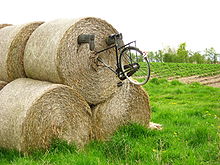
Sense of humour tin can be verbal, visual, or physical. Non-verbal forms of communication–for example, music or visual art–can too be humorous.
Root components
- Being reflective of or imitative of reality
- Surprise/misdirection, contradiction/paradox, ambivalence.
Methods
- Farce
- Hyperbole
- Metaphor
- Pun
- Reframing
- Timing
Behaviour, identify and size
Rowan Atkinson explains in his lecture in the documentary Funny Business [49] that an object or a person can go funny in three ways:
- by behaving in an unusual manner,
- by existence in an unusual identify,
- past being the incorrect size.
Near sight gags fit into ane or more of these categories.
Exaggeration
Some theoreticians of the comic consider exaggeration to exist a universal comic device.[50] It may have unlike forms in different genres, just all rely on the fact that the easiest fashion to brand things laughable is to exaggerate to the point of absurdity their salient traits.[51]
Taxonomy
There are many taxonomies of humor; the post-obit is used to classify humorous tweets in (Rayz 2012).[52]
- Anecdotes
- Fantasy
- Insult
- Irony
- Jokes
- Observational
- Quote
- Role play
- Self-deprecation
- Vulgarity
- Give-and-take play
- Other
Civilization
Dissimilar cultures accept different typical expectations of sense of humour so comedy shows are not always successful when transplanted into another culture. For case, a 2004 BBC News commodity discusses a stereotype among British comedians that Americans and Germans exercise not understand irony, and therefore Great britain sitcoms are non appreciated by them.[53]
See too
- British humour
- Deadpan
- Form-versus-content humour
- Gelotology, the study of laughing and laughter
- Humor in translation
- Sense of humor styles
- List of humorists
- Surreal sense of humor
- Theories of humour
References
- ^ Raymond Smullyan, "The Planet Without Laughter", This Book Needs No Title
- ^ Peter McGraw, "Too close for Comfort, or As well Far to care? Finding Sense of humor in Distant Tragedies and Close Mishaps"
- ^ Nicholas Kuiper, "Prudence and Racial Humor: Troubling Epithets"[ full citation needed ]
- ^ "The Quotations Page: Quote from Eastward.B. White". Retrieved 26 Baronial 2018.
- ^ Ritu Gairola Khanduri. 2014. Caricaturing Culture in Republic of india: Cartoons and History of the Modern Earth. Cambridge: Cambridge Academy Press.
- ^ Seth Benedict Graham A cultural analysis of the Russo-Soviet Anekdot 2003 p. 13
- ^ Bakhtin, Mikhail. Rabelais and His World [1941, 1965]. Trans. Hélène Iswolsky. Bloomington: Indiana University Press p. 12
- ^ Force, Nichole; Read, Grand. A. Last updated: 8 October 2018~ 4 min (2016-05-17). "The Fashion of the Comedian". psychcentral.com . Retrieved 2019-10-25 .
- ^ Webber, Edwin J. (January 1958), "Comedy every bit Satire in Hispano-Arabic Spain", Hispanic Review, 26 (i): one–xi, doi:10.2307/470561, JSTOR 470561
- ^ Michael Garnice (11 March 2012). "Mento Music Lord Flea". Retrieved 14 Apr 2013.
- ^ Xiao, Dong Yue (2010). "Exploration of Chinese humour: Historical review, empirical findings, and critical reflections". Humor. 23 (iii). doi:ten.1515/HUMR.2010.018. S2CID 201056950.
- ^ C. Harbsmeier, "Confucius-Ridens, Humour in the Analects." Harvard Journal of Asiatic Studies 50. 1: 131–61.
- ^ Jocelyn Chey and Jessica Milner Davis, eds. "Humor in Chinese Life and Letters: Classical and Traditional Approaches" (HKUP, 2011)
- ^ "The Invention of Li Yu – Patrick Hanan – Harvard Academy Press". www.hup.harvard.edu . Retrieved 26 Baronial 2018.
- ^ "Comic Visions of Modern Prc" (PDF). u.osu.edu.
- ^ Christopher Rea, "The Historic period of Irreverence: A New History of Laughter in Communist china" (University of California Press, 2015)
- ^ Suoqiao, Qian (2011). "Discovering Sense of humour in Modern Prc: The Launching of the Analects Fortnightly Journal and the 'Yr of Humour' (1933)". In Chey, J.; Milner Davis, J. (eds.). Humour in Chinese Life and Messages: Classical and Traditional Approaches. Hong Kong University Press. pp. 191–218, 251–254. ISBN9789888083527.
- ^ "Archived re-create". Archived from the original on 2016-10-02. Retrieved 2016-09-30 .
{{cite web}}: CS1 maint: archived copy as championship (link) - ^ David Moser. "Stifled Laughter". www.danwei.org.
- ^ Jessica Milner Davis; Jocelyn Chey (2013). "Sense of humour in Chinese Life and Civilization: Resistance and Control in Modern Times". www.hkupress.org.
- ^ a b c d e f k h i j Lundy, Tan, Cunningham (1998). "Heterosexual romantic preferences: The importance of humor and physical attractiveness for different types of relationships". Personal Relationships. 5 (iii): 311–325. doi:10.1111/j.1475-6811.1998.tb00174.x.
{{cite journal}}: CS1 maint: multiple names: authors listing (link) - ^ Hewitt, Fifty. (1958). "Pupil perceptions of traits desired in themselves as dating and marriage partners". Union and Family Living. xx (4): 344–349. doi:x.2307/348256. JSTOR 348256.
- ^ Goodwin, R. (1990). "Sex differences among partner preferences: Are the sexes really very like?". Sex Roles. 23 (9–10): 501–513. doi:10.1007/bf00289765. S2CID 145748159.
- ^ Kenrick, Sadalla, Groth, Trost (1990). "Evolution, traits, and the stages of the parental investment model". Journal of Personality. 58 (1): 97–116. doi:10.1111/j.1467-6494.1990.tb00909.ten. PMID 23750377.
{{cite journal}}: CS1 maint: multiple names: authors list (link) - ^ a b c d Bressler, Balshine (2006). "The influence of sense of humor on desirability". Development and Human Behavior. 27: 29–39. doi:ten.1016/j.evolhumbehav.2005.06.002.
- ^ a b c Kuiper & Martin (1993). "Humour and self-concept". Humor: International Journal of Humor Enquiry. half-dozen (iii). doi:10.1515/humr.1993.6.three.251. S2CID 145015804.
- ^ a b Bos, Due east. H.; Snippe, E.; de Jonge, P.; Jeronimus, B. F. (2016). "Preserving Subjective Wellbeing in the Face of Psychopathology: Buffering Effects of Personal Strengths and Resources". PLOS I. 11 (3): e0150867. Bibcode:2016PLoSO..1150867B. doi:10.1371/journal.pone.0150867. PMC4786317. PMID 26963923.
- ^ Kuiper & Martin (1998). "Laughter and stress in daily life: Relation to positive and negative affect". Motivation and Emotion. 22 (2): 133–153. doi:10.1023/A:1021392305352. S2CID 141287941.
- ^ a b c d e f k Martin, Puhlik-Doris, Larsen, Gray., & Weir (2003). "Private differences in uses of humor and their relation to psychological well-being: Development of the humor styles questionnaire". Journal of Research in Personality. 37: 48–75. doi:10.1016/s0092-6566(02)00534-2.
{{cite journal}}: CS1 maint: multiple names: authors list (link) - ^ a b c Kuiper, Grimshaw, Leite., & Kirsh (2004). "Sense of humor is not always the best medicine: Specific components of sense of humor and psychological well-being". Sense of humour: International Journal of Sense of humor Research. 17 (one–2). doi:x.1515/humr.2004.002.
{{cite journal}}: CS1 maint: multiple names: authors listing (link) - ^ "Do cheerfulness, exhilaration, and humor production moderate pain tolerance? A FACS study". ResearchGate. Retrieved 2015-08-11.
- ^ Bennett, Mary Payne; Lengacher, Cecile (2009). "Humor and Laughter May Influence Wellness IV. Humor and Immune Function". Show-Based Complementary and Alternative Medicine. 6 (2): 159–164. doi:10.1093/ecam/nem149. PMC2686627. PMID 18955287.
- ^ Bennett, Mary Payne; Lengacher, Cecile (2008). "Sense of humor and Laughter May Influence Health: III. Laughter and Wellness Outcomes". Prove-Based Complementary and Culling Medicine. 5 (1): 37–40. doi:x.1093/ecam/nem041. PMC2249748. PMID 18317546.
- ^ Fry, W. F.; Stoft, P. Eastward. (1971). "Mirth and oxygen saturation levels of peripheral blood". Psychotherapy and Psychosomatics. 19 (1): 76–84. doi:10.1159/000286308. PMID 5146348.
- ^ Yovetich, Northward. A.; Dale, J. A.; Hudak, M. A. (1990). "Benefits of sense of humor in reduction of threat-induced anxiety". Psychological Reports. 66 (1): 51–58. doi:10.2466/pr0.1990.66.i.51. PMID 2326429. S2CID 23636980.
- ^ a b c d due east f grand h i Plester, Barbara (2009-01-01). "Healthy humour: Using humour to cope at piece of work". Kōtuitui: New Zealand Journal of Social Sciences Online. 4 (one): 89–102. doi:10.1080/1177083X.2009.9522446.
- ^ a b c d east f g h i j Bolton, Sharon C.; Houlihan, Maeve (2009-ten-02). "Are we having fun nevertheless? A consideration of workplace fun and engagement". Employee Relations. 31 (vi): 556–568. doi:10.1108/01425450910991721. ISSN 0142-5455.
- ^ a b c Szameitat, Diana P., et al. Differentiation of Emotions in Laughter at the Behavioural Level. 2009 Emotion nine (iii).
- ^ a b Strick, Madelijn; et al. (2009). "Finding Comfort in a Joke: Consolatory Effects of Sense of humour Through Cognitive Lark". Emotion. ix (4): 574–578. doi:10.1037/a0015951. PMID 19653782. S2CID 14369631.
- ^ a b Fredrickson, Barbara L. (1998). "What Practiced Are Positive Emotions?". Review of General Psychology. 2 (3): 300–319. doi:10.1037/1089-2680.ii.3.300. PMC3156001. PMID 21850154.
- ^ "Sense of humour in Cancer Treatment". Retrieved 22 January 2017.
- ^ Tsujimoto, Y.; Nakamura, Y.; et al. (2021). "Humour‐based interventions for people with schizophrenia". Cochrane Database of Systematic Reviews. 2021 (10): CD013367. doi:10.1002/14651858.CD013367.pub2. PMC 8514248. PMID 34644398.
- ^ Keltner, D.; Bonanno, G. A. (1997). "A study of laughter and dissociation: Distinct correlates of laughter and smiling during bereavement". Journal of Personality and Social Psychology. 73 (iv): 687–702. doi:x.1037/0022-3514.73.4.687. PMID 9325589.
- ^ a b Abel, M (2002). "Sense of humor, stress, and coping strategies". International Periodical of Humour Inquiry. 15 (four): 365–381. doi:ten.1515/humr.15.iv.365. S2CID 35616418.
- ^ Kupier, N. A.; Martin, R. A. (1993). "Humor and cocky-concept". International Periodical of Sense of humor Research. six (iii): 251–270.
- ^ a b c Crew Solomon, Jennifer (Jan 1996). "American Behavioral Scientist". Humor and Aging Well: A Laughing Thing or a Thing of Laughing?. iii. 39 (3): 249–271. doi:10.1177/0002764296039003004. S2CID 143126889.
- ^ Shelley A. Crawford & Nerina J. Caltabiano (2011): Promoting emotional well-existence through the use of humor, The Journal of Positive Psychology: Dedicated to furthering research and promoting good practice, 6: 3, 237–252
- ^ Vrticka, Pascal; Black, Jessica M.; Reiss, Allan L. (30 Oct 2013). "The neural basis of sense of humor processing". Nature Reviews Neuroscience. 14 (12): 860–868. doi:10.1038/nrn3566. PMID 24169937. S2CID 12734138.
- ^ Rowan Atkinson/David Hinton, Funny Business (tv series), Episode 1 – aired 22 November 1992, United kingdom, Tiger Television Productions
- ^ Emil Draitser, Techniques of Satire (1994) p. 135
- ^ M. Eastman/Due west. Fry, Enjoyment of Laughter (2008) p. 156
- ^ "Automated Humor Nomenclature on Twitter" (PDF). 2012.
- ^ "Do the Americans get irony?". BBC News. 27 Jan 2004. Retrieved 2 Apr 2012.
Further reading
- Alexander, Richard (1984), Exact humor and variation in English language: Sociolinguistic notes on a diverseness of jokes
- Alexander, Richard (1997), Aspects of verbal humour in English
- Basu, S (December 1999), "Dialogic ethics and the virtue of sense of humor", Journal of Political Philosophy, 7 (4): 378–403, doi:10.1111/1467-9760.00082, retrieved 2007-07-06 (Abstract)
- Billig, M. (2005). Laughter and ridicule: Towards a social critique of humour. London: Sage. ISBN 1-4129-1143-v
- Bricker, Victoria Reifler (Winter, 1980) The Office of Humour in Zinacantan Journal of Anthropological Research, Vol. 36, No. iv, pp. 411–418
- Buijzen, Moniek; Valkenburg, Patti Thousand. (2004), "Developing a Typology of Humor in Audiovisual Media", Media Psychology, half dozen (ii): 147–167, doi:ten.1207/s1532785xmep0602_2, S2CID 96438940 (Abstract)
- Carrell, Amy (2000), Historical views of humour, University of Central Oklahoma. Retrieved on 2007-07-06.
- García-Barriocanal, Elena; Sicilia, Miguel-Angel; Palomar, David (2005), A Graphical Humor Ontology for Gimmicky Cultural Heritage Admission (PDF), Madrid: Academy of Alcalá, archived from the original (PDF) on 2006-05-23, retrieved 2007-07-06
- Goldstein, Jeffrey H., et al. (1976) "Humour, Laughter, and Comedy: A Bibliography of Empirical and Nonempirical Analyses in the English Linguistic communication." It's a Funny Matter, Sense of humor. Ed. Antony J. Chapman and Hugh C. Foot. Oxford and New York: Pergamon Press, 1976. 469–504.
- Hurley, Matthew Thou., Dennett, Daniel C., and Adams, Reginald B. Jr. (2011), Within Jokes: Using Sense of humour to Reverse-Engineer the Mind. Cambridge, Massachusetts: The MIT Press. ISBN 978-0-262-01582-0
- Holland, Norman. (1982) "Bibliography of Theories of Humour." Laughing; A Psychology of Humor. Ithaca: Cornell Upward, 209–223.
- Martin, Rod A. (2007). The Psychology Of Humour: An Integrative Arroyo. London, UK: Elsevier Academic Press. ISBN 978-0-12-372564-6
- McGhee, Paul E. (1984) "Current American Psychological Research on Sense of humor." Jahrbuche fur Internationale Germanistik sixteen.ii: 37–57.
- Mintz, Lawrence Due east., ed. (1988) Humour in America: A Research Guide to Genres and Topics. Westport, CT: Greenwood, 1988. ISBN 0-313-24551-7; OCLC 16085479.
- Mobbs, D.; Greicius, M. D.; Abdel-Azim, Due east.; Menon, V.; Reiss, A. L. (2003), "Humor modulates the mesolimbic advantage centres", Neuron, 40 (five): 1041–1048, doi:x.1016/S0896-6273(03)00751-7, PMID 14659102.
- Nilsen, Don Fifty. F. (1992) "Satire in American Literature." Humor in American Literature: A Selected Annotated Bibliography. New York: Garland, 1992. 543–48.
- Pogel, Nancy; and Paul P. Somers Jr. (1988) "Literary Humor." Humor in America: A Inquiry Guide to Genres and Topics. Ed. Lawrence E. Mintz. London: Greenwood, 1988. 1–34.
- Roth, Thou.; Yap, R.; Curt, D. (2006). "Examining sense of humour in HRD from theoretical and applied perspectives". Human Resource Development International. 9 (1): 121–127. doi:10.1080/13678860600563424. S2CID 143854518.
- Smuts, Aaron. "Sense of humor". Internet Encyclopedia of Philosophy
- Wogan, Peter (Spring 2006), "Laughing At First Contact", Visual Anthropology Review (published 12 Dec 2006), 22 (i): 14–34, doi:ten.1525/var.2006.22.1.xiv (Abstract)
External links
Source: https://en.wikipedia.org/wiki/Humour
0 Response to "Would People Respond to Funny or Serious Writing"
Post a Comment